Auto glass
Windshield chip or crack: repair or replace?
Find out if a windshield chip or crack can be repaired. We use the industry repair standard and California law.
 Faith Auto Glass & Tinting · 4 min read
On this page8 sections
A rock chip looks small, so it is easy to put off. We would rather you call early. Some damage can be repaired, and some needs a new windshield.
What repair does
The industry repair standard, ANSI/AGSC/NWRD/ROLAGS 002-2022, calls windshield repair a permanent process for laminated glass. A trained technician can improve the clarity of the damaged area. Repair also restores a smooth surface for your wipers. It can stop the damage from spreading.
Repair does not erase the damage. The standard calls what remains a cosmetic blemish. Repair also keeps the original bond, because the glass stays in place.
Know your damage type
The standard names the common types. You can often tell which one you have by looking.
- Bullseye: a separated cone in the outer layer of the glass.
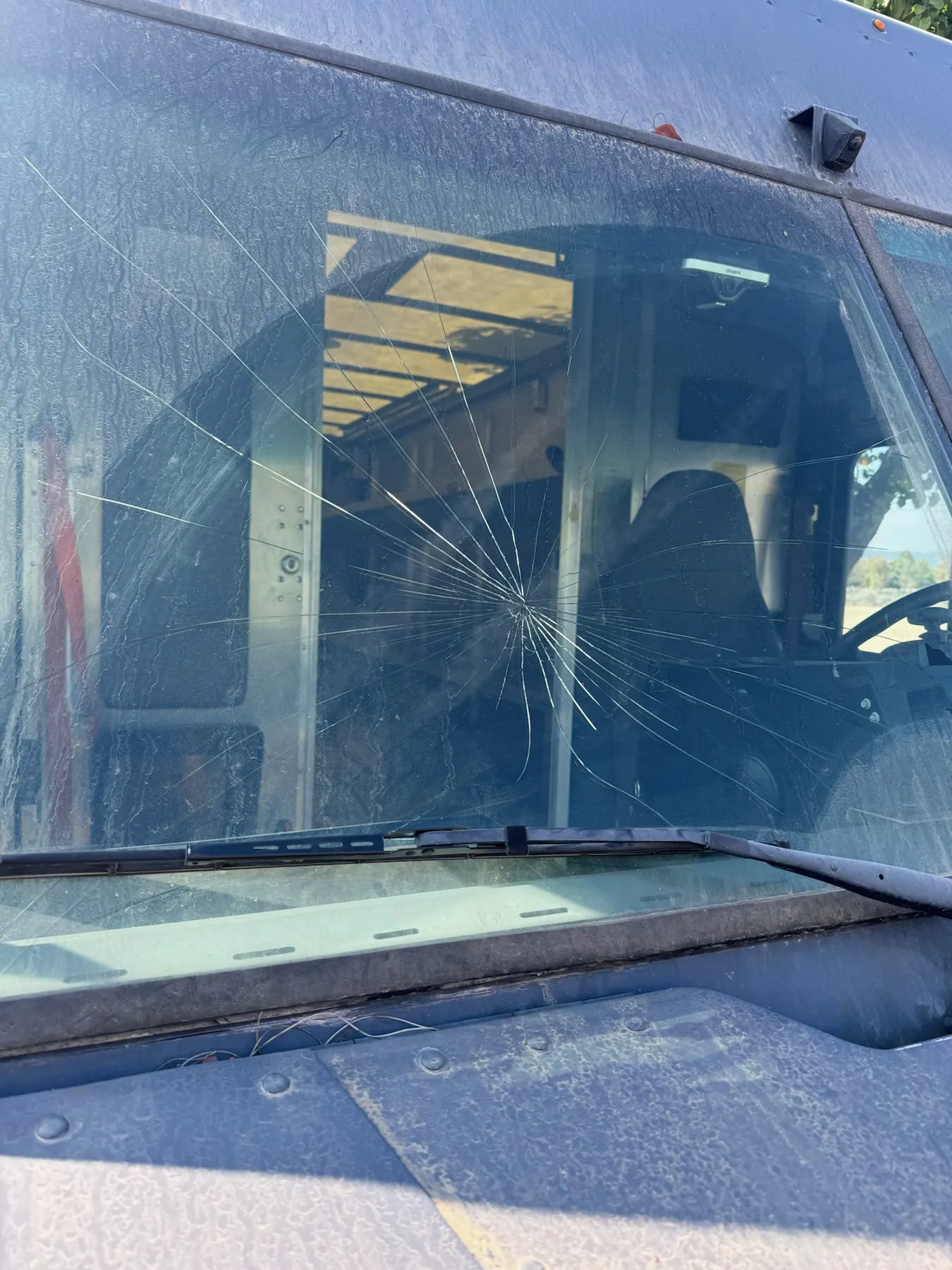
- Star break: a series of legs that radiate from the impact point.
- Combination break: more than 1 feature, such as a star inside a bullseye.
- Crack: a single line of separation. An edge crack reaches the edge of the glass. A floater crack does not.
How big is too big
The standard lists the largest damage it treats as repairable.
| Damage type | Largest repairable size |
|---|---|
| Bullseye | 1 inch (25 mm) across |
| Half moon (partial bullseye) | 1 inch (25 mm) across |
| Star break | 3 inches (75 mm) across |
| Combination break | Body up to 2 inches (50 mm), not counting legs |
| Crack | Up to 14 inches (350 mm) |
We check every windshield in person and use our own limits, which differ from this table. Damage bigger than a half-dollar, or a crack longer than 6 inches, often means a new windshield.
Size is only one test. Location and condition count as well.
When the standard says replace
The standard recommends replacement, not repair, in these cases:
- The damage goes through both layers of the glass, or is on the inner layer.
- Three or more long cracks run out from one impact point.
- A crack reaches more than 1 edge, or starts at an edge with no impact point.
- Dirt in the break cannot be cleaned out, or the plastic layer between the glass sheets is damaged.
- The pit at the impact point is wider than 3/8 inch (9 mm).
- The damage is where a camera or sensor reads through the glass.
Not every crack starts with a rock. The standard names 2 causes of damage: impact, and stress or twist. Twist happens when the windshield flexes in the vehicle frame or was mounted improperly.
Damage in your line of sight
The standard defines a driver's primary viewing area. It is 12 inches wide, centered on the driver, and as tall as the wiper sweep. In that area, the standard says not to repair when:
- The damage is wider than 1 inch (25 mm).
- The finished pit would be larger than 3/16 inch (5 mm).
- The repair would be within 4 inches (100 mm) of another repair.
Two repairs close together can create a blind spot, because both eyes lose the same patch of view. A technician can also decline any repair that would affect how the car operates.
What California law says
California Vehicle Code section 26710 applies to a damaged windshield. It bars driving when the windshield or rear window is defective enough to impair your vision. That applies to your view to the front and the rear.
The law sets no size limit. It asks whether the damage affects your view. A crack across your line of sight is the one to fix first.
What to do right after a chip
- Note where the damage is and how big it is. A photo helps us judge it.
- Keep it clean and dry. The standard lists dirt that cannot be cleaned out as a reason to replace.
- Call soon, before the damage has a chance to spread.
- Check your policy for how it handles glass claims. Our insurance guide explains the basics.
“Had a crack in my car windshield sealed and I'm really happy with the results. Quick service, fair price, a friendly atmosphere, and now the crack's barely noticeable.”
When replacement is the answer
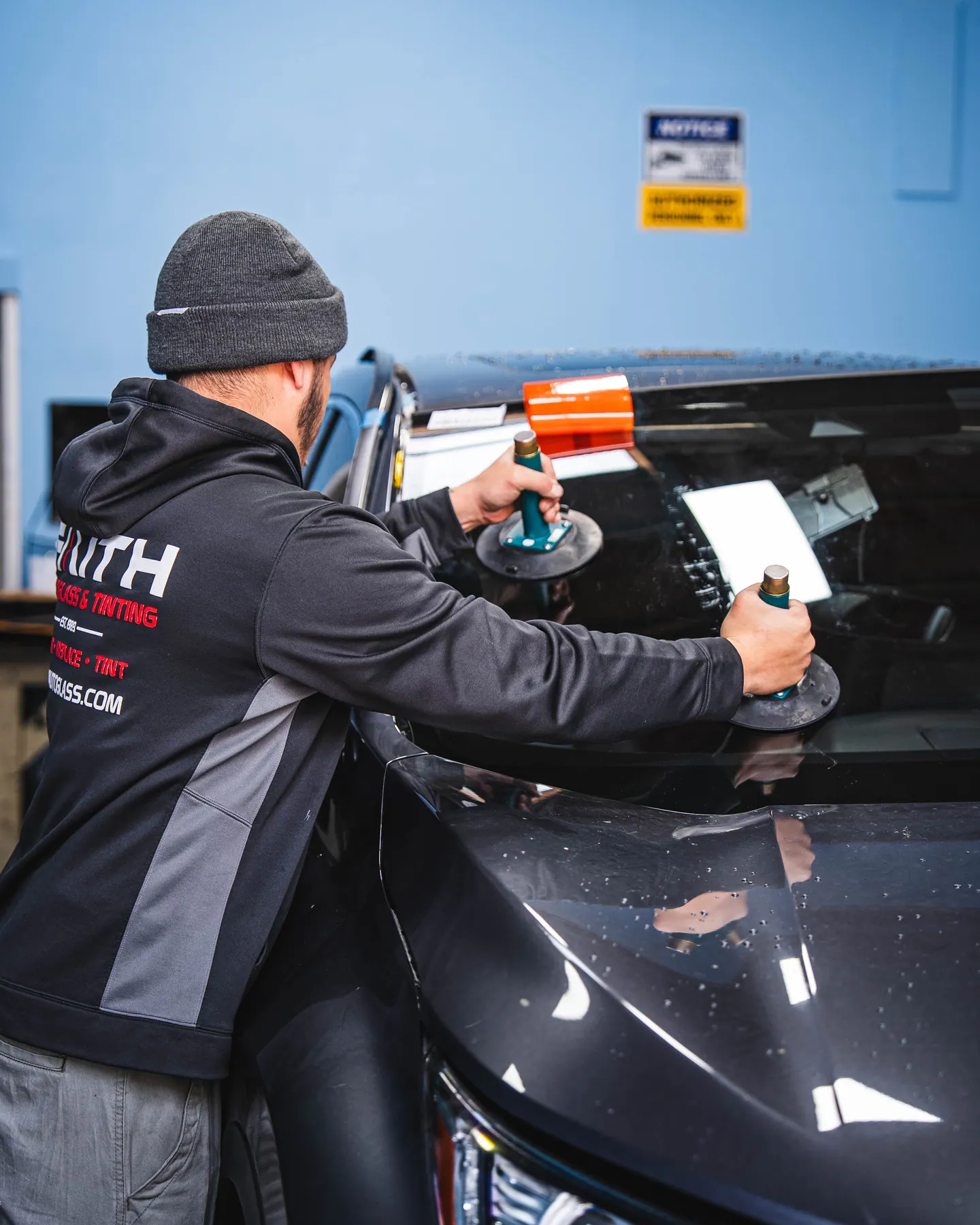
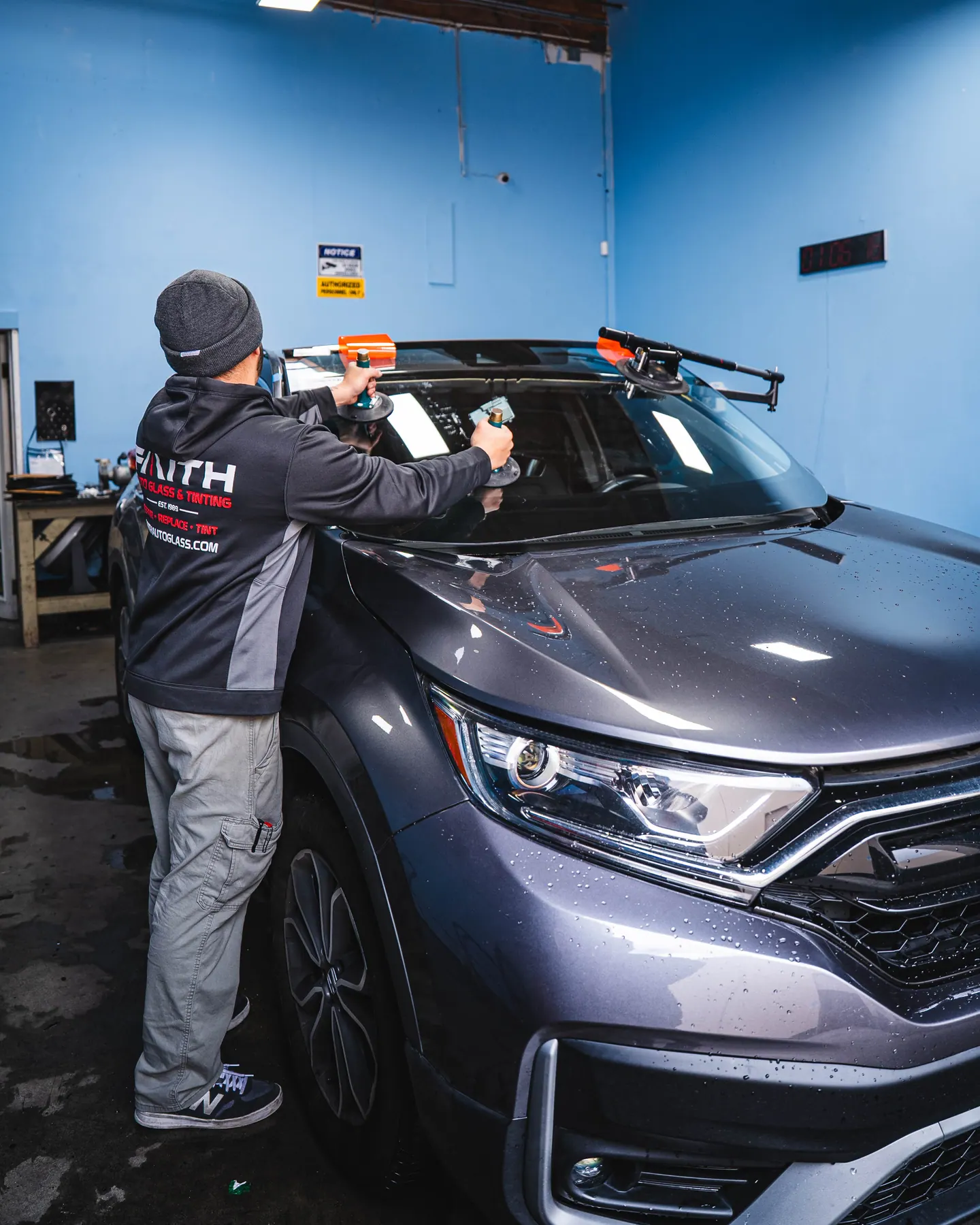
Replacement means a new windshield bonded to your car's frame. Federal Motor Vehicle Safety Standard 212 exists to keep the windshield in place during a crash. A windshield that stays put keeps its protective properties and helps prevent occupants from being ejected.
That federal rule uses a barrier crash test at up to 30 mph. The mounting must keep at least 50% of the glass edge on each side attached. It applies to vehicles with passive restraints, such as airbags.
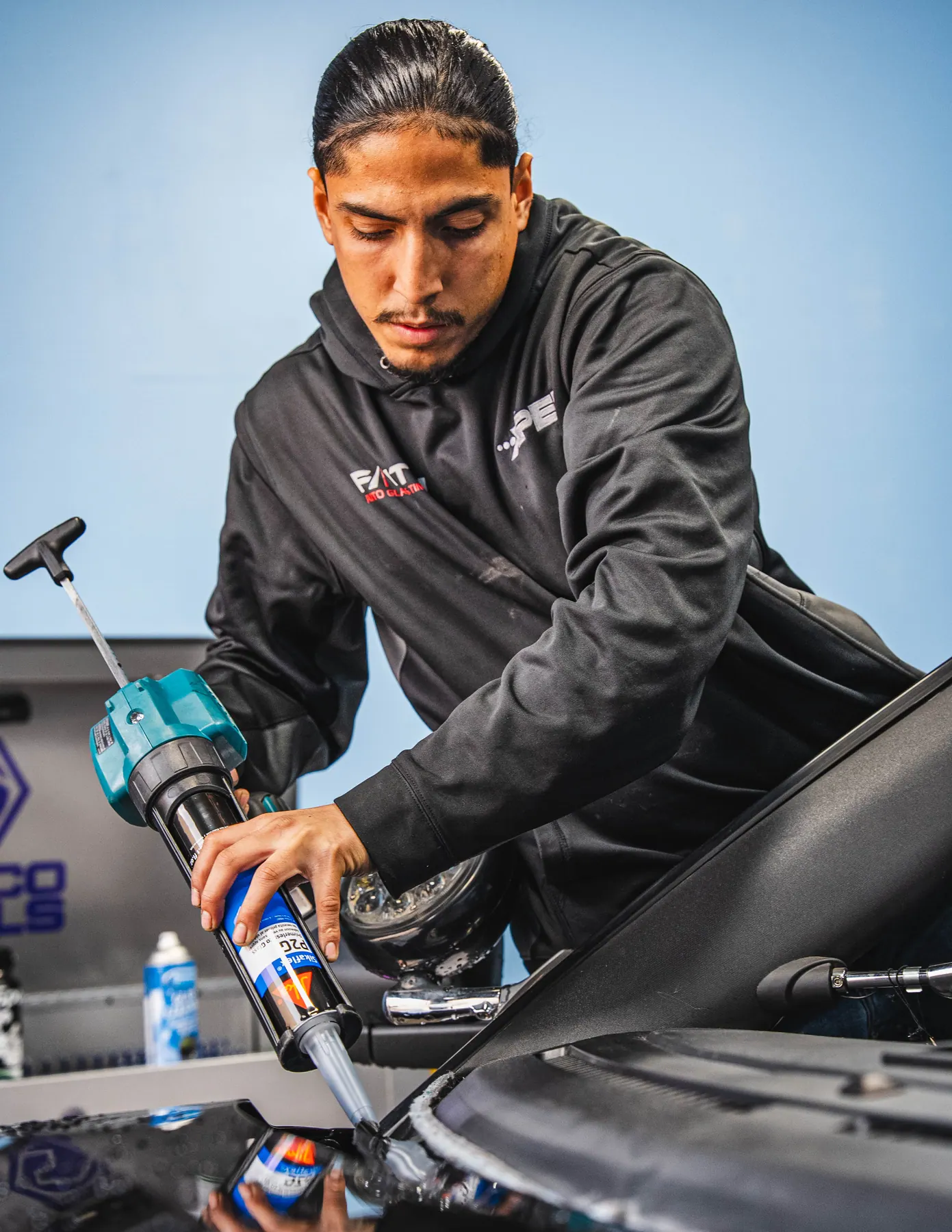
Our team is SIKA certified, and we are licensed by the California Bureau of Automotive Repair. We back windshield replacements with a lifetime workmanship warranty. It covers water leaks, air leaks and other workmanship problems, not the glass itself.
Newer cars add 1 more step. If your car has a camera behind the windshield, read our guide to ADAS calibration after windshield replacement.
See how each service works on our chip and crack repair and windshield replacement pages. We serve Temecula and the surrounding valley, in the shop and by mobile service.
Get a glass quote online. Add a photo of the damage so we can see its size and where it is.
Get a quoteSources
- ANSI/AGSC/NWRD/ROLAGS 002-2022, Repair of Laminated Automotive Glass Standard (Auto Glass Safety Council)webstore.ansi.org
- California Vehicle Code section 26710, windshield and rear window conditionleginfo.legislature.ca.gov
- 49 CFR 571.212, Federal Motor Vehicle Safety Standard 212, windshield mountingecfr.gov