XPEL film comparisons
XPEL CS Black vs XR Black vs XR Plus window tint
Compare XPEL's 3 PRIME window tint films on technology, heat rejection, shades, warranty and price tier. Pick the right one for your car.
 Faith Auto Glass & Tinting · 4 min read
On this page9 sections
XPEL's PRIME window tint page lists 3 films: PRIME CS, PRIME XR and PRIME XR Plus. The spec sheet labels them the CS Black, XR Black and XR Plus lines. All 3 block 99% of UV. They differ in technology, heat rejection and price.
The short version
| CS Black | XR Black | XR Plus | |
|---|---|---|---|
| Technology | Color-stable dyed film | Nano-ceramic | Nano-ceramic |
| Shades (VLT range) | 5% to 86% | 5% to 68% | 5% to 67% |
| Total solar energy rejected | 24% to 45% | 49% to 66% | 52% to 71% |
| Infrared rejection at 1025 nm | 12% to 35% | 78% to 85% | 92% to 96% |
| Infrared energy rejection, 780 to 2500 nm | 11% to 32% | 58% to 64% | 67% to 70% |
| UV rejection | 99% | 99% | 99% |
| Warranty | For the life of your vehicle | For the life of your vehicle | For the life of your vehicle |
| XPEL price tier | $ | $$ | $$$ |
Blocking over 99% of UV helps protect your skin and your interior from sun damage. Glare reduction reaches 95% in all 3 lines, at the darkest shades.
Reading the numbers
Total solar energy rejected is the share of the sun's energy the film and glass keep out. Infrared rejection at 1025 nm is a single-wavelength reading. Infrared energy rejection spans 780 to 2500 nm and counts heat the film absorbs and re-radiates.
XPEL measures every film on 1/8 inch (3 mm) glass. Within each line, darker shades generally reject more total solar energy.
The number in a shade name is a label, not the measured VLT. Here is how the 3 lines compare at the 35 shade:
| At the 35 shade | CS Black | XR Black | XR Plus |
|---|---|---|---|
| Measured VLT | 34% | 36% | 38% |
| Total solar energy rejected | 36% | 59% | 59% |
| Infrared energy rejection | 11% | 58% | 70% |
| Infrared rejection at 1025 nm | 12% | 78% | 96% |
CS Black
PRIME CS is a color-stable dyed film. It suits drivers who want a clean, non-reflective look and reliable UV protection at an affordable price point.
It rejects the least heat of the 3. Its infrared rejection runs 12% to 35%, against 78% to 96% for the ceramic films. Choose it when privacy, glare and UV come before heat.
XR Black
PRIME XR Black is a ceramic film and the core ceramic option in the PRIME range. None of the 3 films interferes with signals.
Its infrared rejection runs 78% to 85%, much higher than CS Black.
XR Plus
PRIME XR Plus is the top tier of the 3. It is a multi-layer nano-ceramic film for the highest level of cabin comfort. Its infrared rejection runs 92% to 96%.
At the 35 shade, XR Black and XR Plus tie on total solar energy rejected. XR Plus rejects more infrared. XPEL also ran its own test on 2 Mazda MX-5s in Texas. The car with XR Plus ran up to 15°F cooler. That is XPEL's claim, not an independent result.
What the warranty includes
XPEL's PRIME warranty runs for the life of your vehicle, starting at installation. It covers discoloration, fading, bubbling, peeling, cracking and delamination in professionally installed film.
Scratches and damage from improper washing, including automatic car washes, are not covered. To claim, notify your installer in writing and provide your warranty card and original receipt. A new owner can take over the warranty by sending XPEL proof of the original installation date.
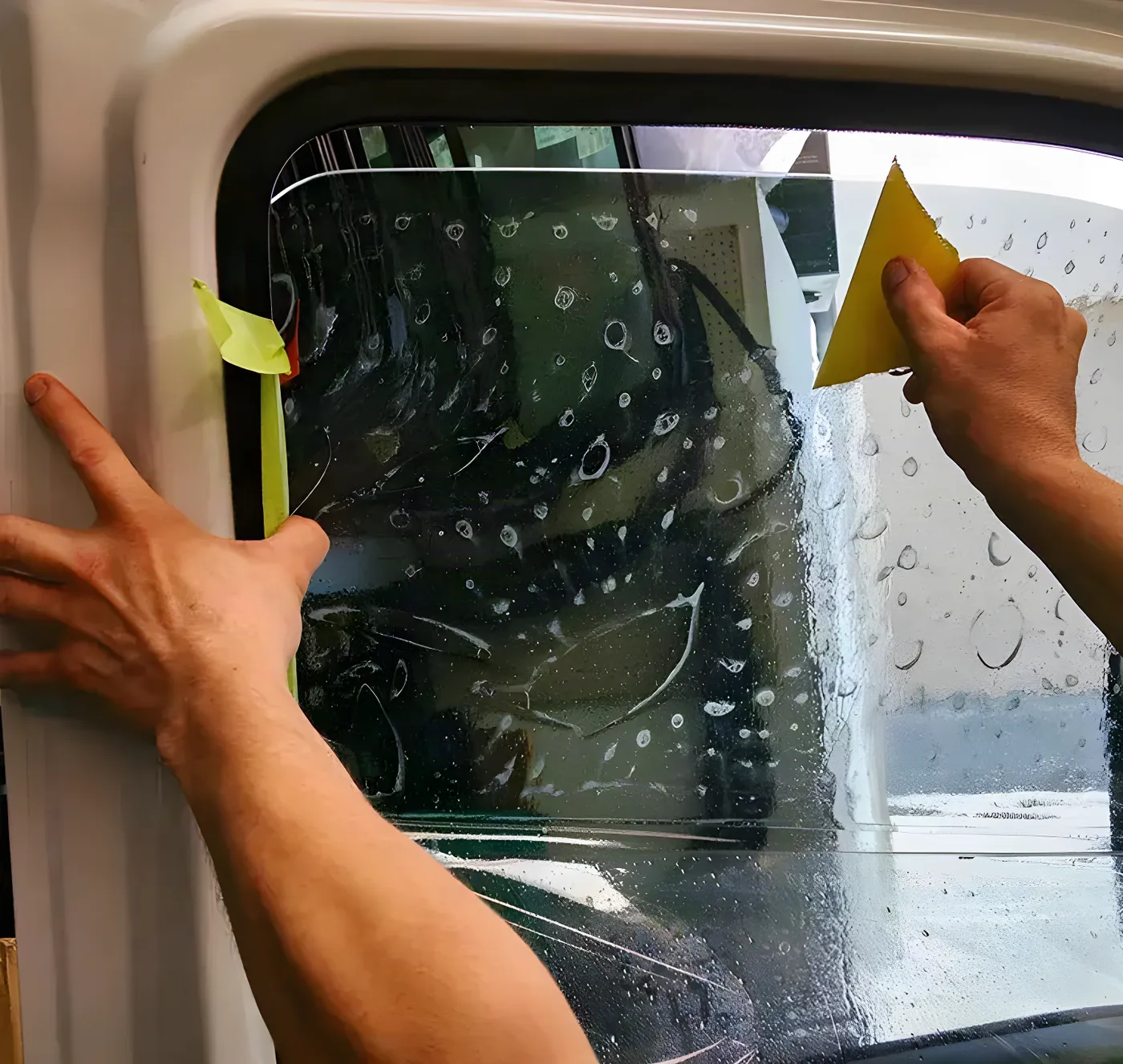
We are an authorized XPEL installer, so we install these films to XPEL's instructions.
“I have had them install windows tint on 4 different vehicles over the years and I've never had issues with the installation. No peeling, bubbling or discoloration.”
Choosing a shade
XPEL's FAQ calls a 35% VLT a good balance of glare reduction and privacy without much loss of visibility. It adds that personal preference and local legal limits decide what suits your car.
In California, those limits differ by window. Front side film must be rated at least 88% VLT. Darker shades suit the rear windows.
Give the film time to dry
XPEL's data sheets call for a dust-free area and air temperatures between 68°F and 86°F during installation. They also say to allow adequate dry-out time before operating the windows or cleaning the glass. Ask us how long to wait on your car.
Which film to choose
- Choose CS Black for privacy, glare control and UV protection at the lowest price tier. It blocks UV like the others, with far less infrared rejection.
- Choose XR Black when heat is a concern and you want ceramic film below the top price tier.
- Choose XR Plus when heat rejection is your top priority.
- Between XR Black and XR Plus, compare the infrared figures for your shade. At the 35 shade, the gap is 78% against 96% at 1025 nm.
Whatever you pick, California law still limits shades on the front windows. Our window tint law guide shows which shades fit which windows. You can also see our window tint page.
Get a tint quote online. Tell us your car and what you want most, and we will help you choose a film and shade.
Get a quoteSources
- XPEL, PRIME window tint (CS, XR and XR Plus comparison)lp.xpel.com
- XPEL PRIME USA specification sheet, Rev 0523xpel.com
- XPEL PRIME CS technical data sheet, R062526assets.contentstack.io
- XPEL PRIME XR technical data sheet, R062526assets.contentstack.io
- XPEL PRIME XR Plus technical data sheet, R062526assets.contentstack.io
- XPEL PRIME automotive window film warranty, R1224assets.contentstack.io